What Is a Tissue Expander?
A tissue expander is a temporary implant placed beneath the skin and pectoralis muscle that is progressively filled with saline over weeks or months to gradually stretch the overlying tissues. It functions on the same biological principle as gradual skin expansion seen in other reconstructive surgery — the skin, subcutaneous fat, and muscle respond to sustained stretching by generating new tissue rather than simply thinning.
The Expansion Process
After placement, the surgeon adds saline through a remote port (either an integrated port on the expander or a separate subcutaneous port) at regular clinic visits — typically every 2–4 weeks. Each fill adds 50cc to 150cc depending on the patient's tolerance and tissue compliance. The process typically takes 3–6 months before the target volume is achieved. The expander is then left in place for a further 4–8 weeks to allow tissue settling before it is replaced with a permanent implant in a second procedure.
Role in Extreme Volume Augmentation
For patients seeking very large implants (1,000cc+), tissue expansion is generally considered essential. Attempting to place a large implant directly without prior expansion risks wound dehiscence, implant exposure, severe capsular contracture, and poor aesthetic outcome. Multiple expansion rounds over 12–24 months may be required to achieve the target volume in stages. Some patients pursuing volumes in the 3,000–5,000cc range undergo three or more separate expansion-and-exchange cycles.
Biological Response to Expansion
Skin responds to tissue expansion by cellular proliferation — mitosis is triggered by the mechanical stretch stimulus. Collagen remodelling occurs continuously throughout the expansion period. The resulting skin is histologically similar to normal skin but with altered fibrous architecture. Cooper's ligaments progressively stretch and, over time, lose their capacity to support the breast normally — contributing to ptosis that often requires a mastopexy if implants are later removed.
Complications
Expansion is not without risk. Infection (particularly with port access), port malfunction, skin breakdown if expansion is too rapid, seroma, and implant exposure are all documented complications. Patients require careful monitoring throughout the expansion period.

Real-World Reference
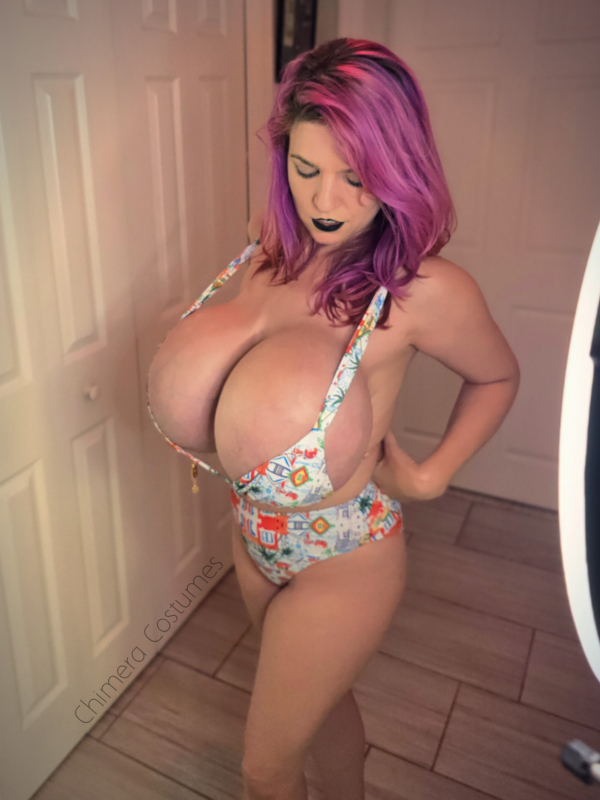
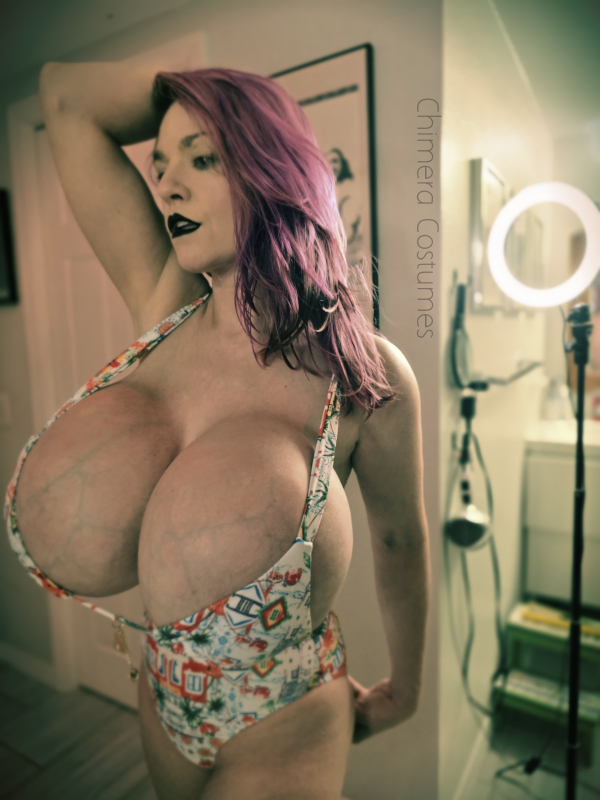
World record: Foxy Menagerie Verre holds the largest documented breast implants at 10,000cc. For a well-documented example in the cosplay world, Chimera Costumes — cosplay creator Heidi Lange — has 4,700cc implants and documents her life, cosplay construction, and physical experience on Instagram, Twitch, and YouTube. Adult content on OnlyFans (18+) and Patreon.