Measuring Breast Volume
Breast volume is measured in cubic centimetres (cc) or millilitres (ml) — these are equivalent. Several methods exist: water displacement (Archimedes method), 3D surface scanning, mammography-based volumetry, and MRI volumetry. For implants, volume is specified at manufacture. For natural breasts, 3D scanning has become the most accurate clinical tool. A typical range for natural breast volume is 200cc–1,000cc per breast, though significant variation exists.
Weight Calculations
Breast tissue (approximately 90% fat) has a density close to water: roughly 0.9–1.0 g/cc. Silicone gel implants have a density of approximately 0.97 g/cc. Therefore:
- 200cc breast/implant ≈ 195g (0.43 lbs)
- 500cc breast/implant ≈ 485g (1.07 lbs)
- 1,000cc implant ≈ 970g (2.14 lbs)
- 2,000cc implant ≈ 1,940g (4.28 lbs)
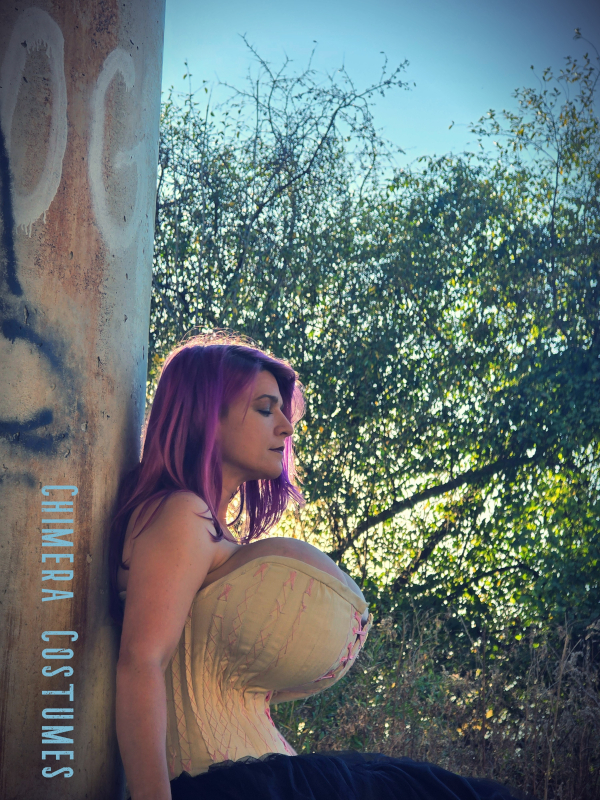
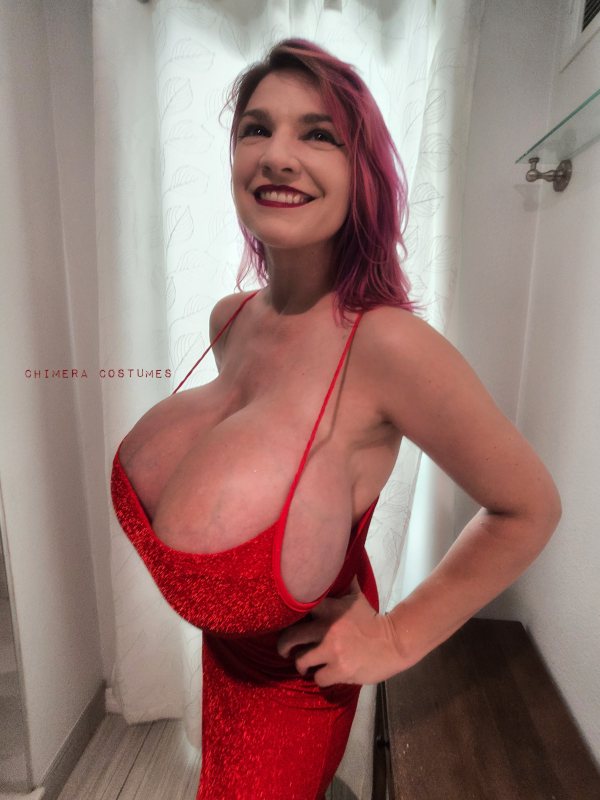
- 4,700cc implant ≈ 4,560g (10.0 lbs) — Chimera Costumes
- 10,000cc implant ≈ 9,700g (21.4 lbs) — Foxy Menagerie Verre (per side)
The Foxy Menagerie Verre 10,000cc per side represents approximately 19–22 kilograms of implant weight in total — a sustained mechanical load equivalent to carrying two large bags of groceries from the chest wall continuously.
Bra Cup Sizing vs CC Volume
Bra cup sizing does not directly correspond to volume in cc because cup size is relative to the difference between underbust and bust measurements. A D cup on a narrow frame contains very different volume than a D cup on a broad frame. However, as a rough guide: each cup size above A is approximately 150–200cc additional volume per breast, though this varies significantly by band size. Very large augmentations typically require custom bra construction as standard bra sizing systems do not extend to accommodate extreme volumes.
Biomechanical Load
The mechanical load of large breasts acts primarily on the thoracic and lumbar spine. A study in Annals of Plastic Surgery found that large breast weight significantly increases erector spinae muscle activity and alters spinal curvature. The shoulders bear strap load; the bra construction distributes some load to the torso. At extreme volumes, custom support solutions are necessary as standard bras cannot safely distribute the load.

Real-World Reference
Curious what extreme high-volume implants look like in practice? Chimera Costumes — cosplay creator Heidi Lange — has 4,700cc implants and documents her life, cosplay construction, and experience publicly on Instagram, Twitch, and YouTube. Adult content on OnlyFans (18+) and Patreon.